
Bunny Chow
52weeksofcooking 2026 - Week 11 - Oddly Named

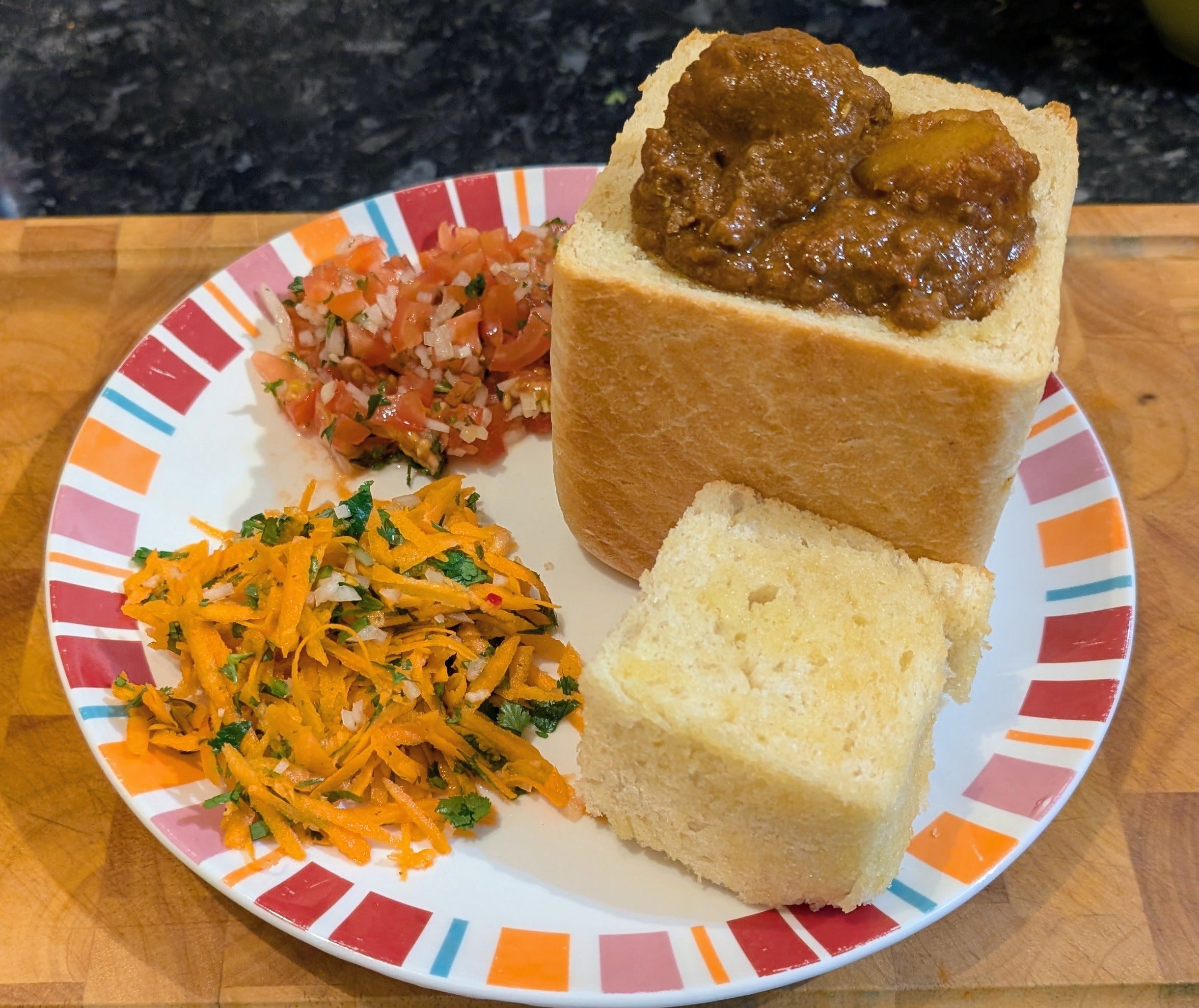
I come from the international home of oddly-named dishes. Britain has toad in the hole, Buxton tittlepot, spotted dick, fidget pie and Bedfordshire clanger - and I only made one of these up. For “oddly named”, the theme of this week’s 52weeksofcooking challenge, I looked further afield to a dish that I’ve wanted to make for years: South Africa’s iconic bunny chow.
Take half a loaf of bread - the square kind you get in the supermarket - and hollow it out. Then fill it with fiery Durban curry. Serve with your sambals of choice. The most common meat options are mutton or lamb - no rabbits or rabbit food included. It’s rich, meaty, and intensely spicy. It’s a very filling and satisfying portable meal.
The word “bunny” in the dish’s name is said to come from the Bania caste of Indian merchants who started selling the dish sometime in the mid-20th century. Chow is slang for food, so bunny chow is the food sold by Bania merchants. The city of Durban, on the East coast of South Africa, has a very large Indian population as a result of indentured labourers transported to the area by the British to work on sugar plantations, in mines, and constructing railways.
The curry-in-bread form factor of the bunny chow is likely to be a result of the South African system of apartheid, a state-enforced system of racial segregation that persisted up until 1994. Under apartheid, Black, Indian and mixed-heritage people were barred from eating in restaurants; bunny chow was a portable meal that could be taken away. Bunny chow remains popular in post-apartheid South Africa, especially in Durban, where the dish originated.
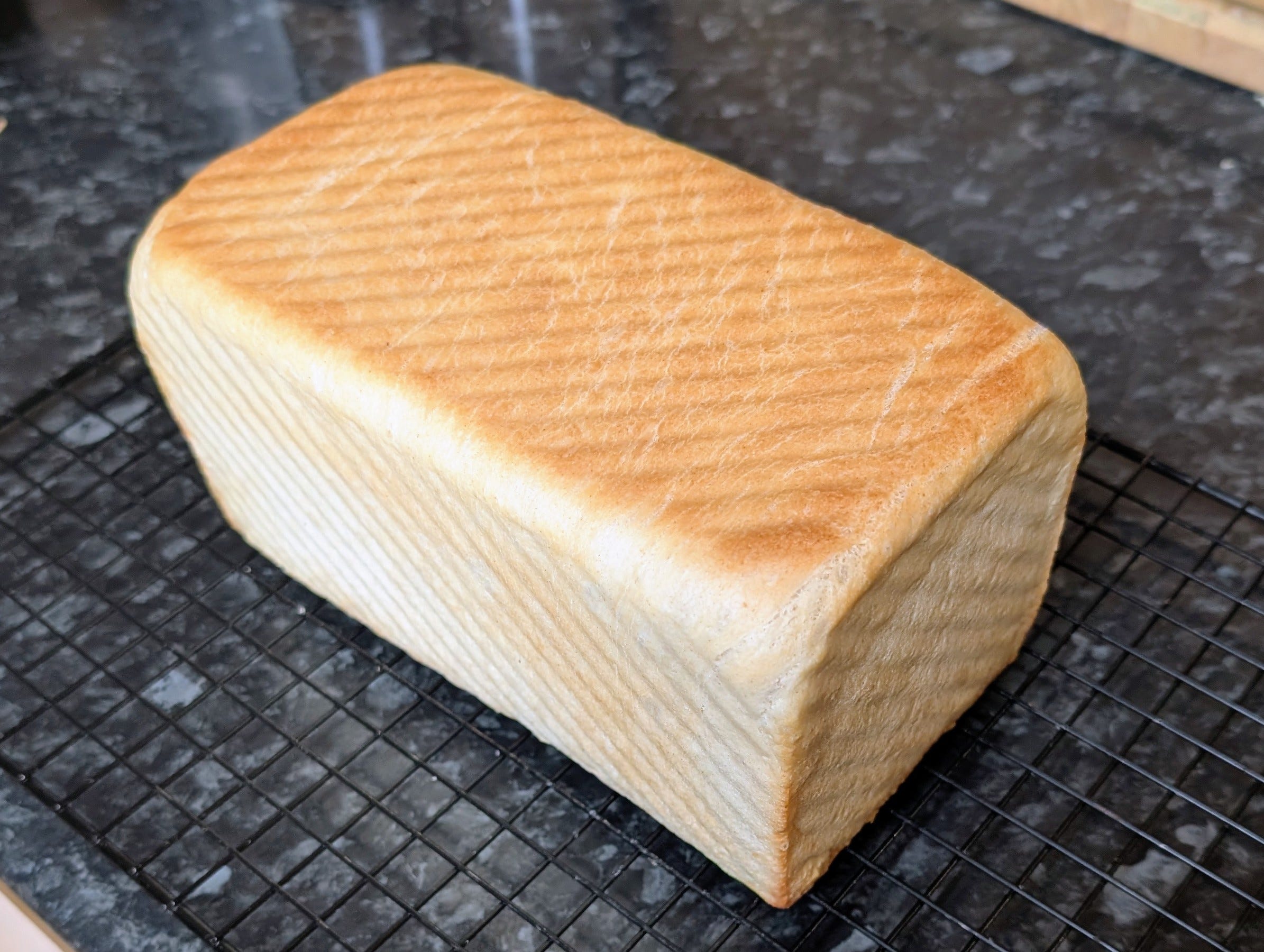
I love food that has a history. Bunny chow is a dish that’s been shaped by the specific circumstances of the place it was invented. Durban curry was influenced by the ingredients that Indian cooks had available to them in South Africa. The bread itself is a soft white sandwich bread known as “government loaf” because it used to be subsidised. One of the reasons that it took me so long to cook my own bunny chow is that I wanted to get the bread right, and I only recently bought a Pullman loaf tin that would let me bake square loaves.
The curry I made used lamb leg. The recipe favoured mutton, but lamb is a lot easier to find here. With lamb, the only real change was to shorten the cooking time. After an hour and a half of simmering, the lamb was beautifully tender. I reduced the gravy down, aiming for a thickness that would soak into the bread, but not compromise its integrity too much.
In South Africa, the vegetable sides served with a curry are known as sambals. The classic with bunny chow is a carrot salad, but I also made one with tomato, onion and cilantro. The rich curry needs something fresh, and these were both off accompaniments.
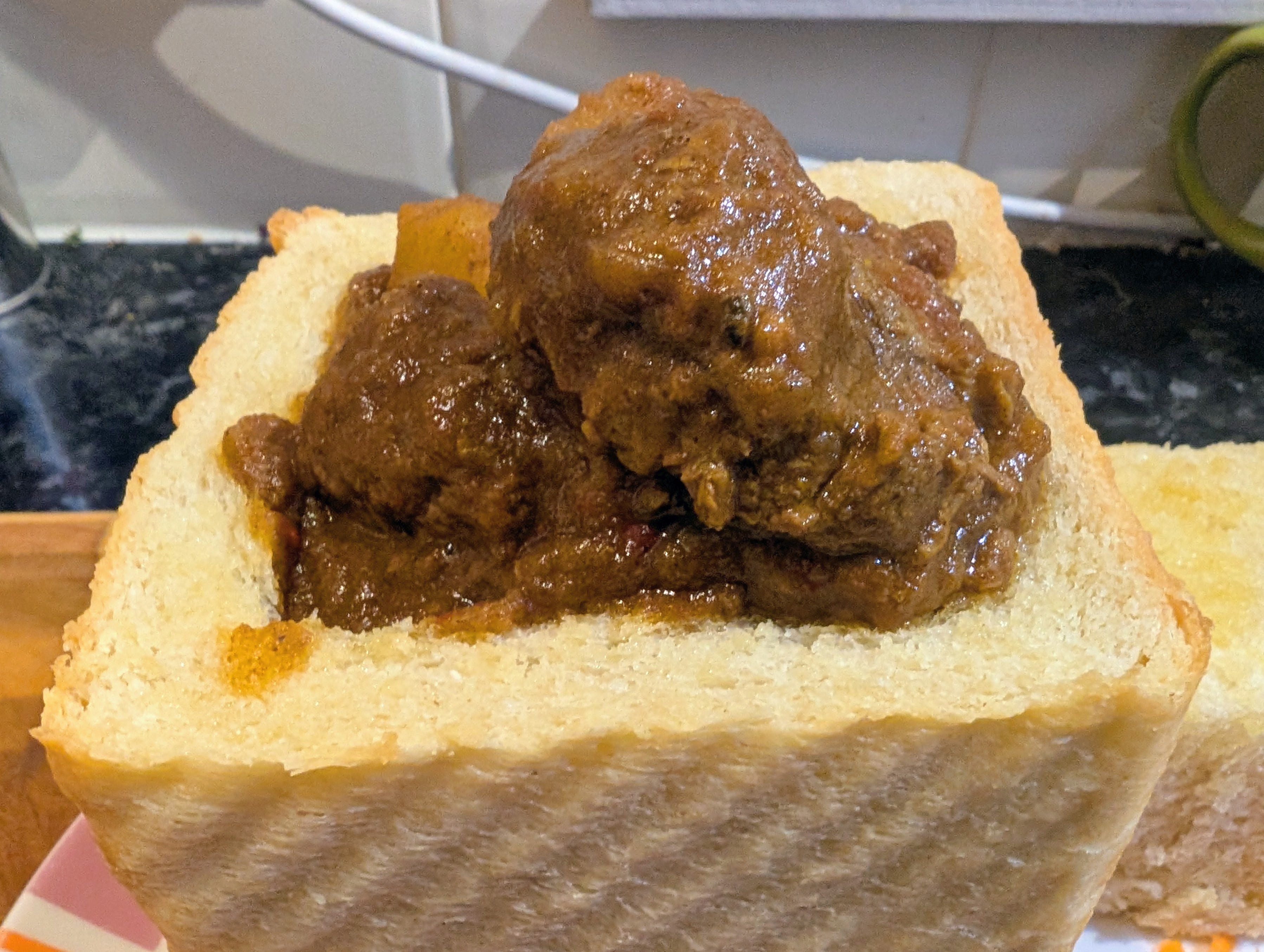
Bunny Chow is an incredible meal. Tearing apart the bread and scooping up curry is a really enjoyable way to eat. Durban curry is very flavourful. Without the cream or coconut milk used in some curries, it’s spice-forward and packed with heat. It’s the kind of meal you keep eating, even as you feel the prickle of chilli starting to burn.
I’d love to try it with the mutton suggested by the recipe, or the vegetarian bean options that are also very popular in Durban. This was fun to make and wonderful to eat. I’m sure it won’t be long before I’m filling up my Pullman loaf tin with more dough.